
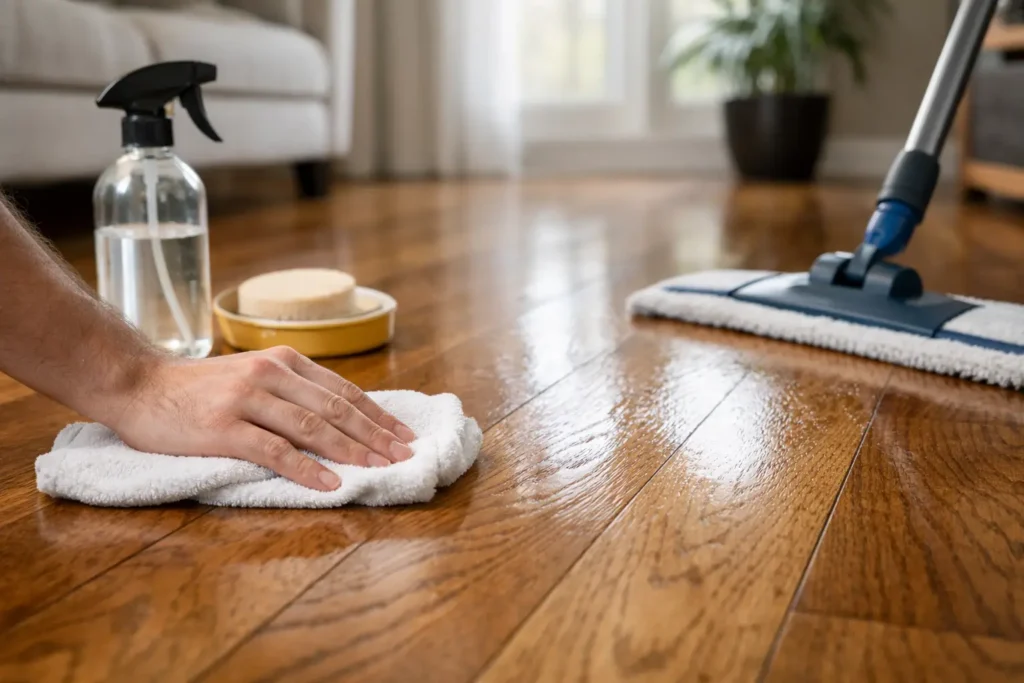
The first few weeks after a floor is refinished can make or break how it looks a year from now. If you’re wondering how to maintain refinished hardwood floors, the good news is that the right care is not complicated. It comes down to gentle cleaning, controlling moisture, and preventing the kind of wear that slowly dulls even a beautifully restored surface.
For Connecticut homeowners, that matters more than most people realize. Between winter salt, spring rain, humid summers, and heavy indoor traffic from kids, pets, and guests, refinished hardwood takes a beating if it is not protected the right way. The goal is not to baby your floors. The goal is to build a few smart habits that keep them looking clean, rich, and durable for years.
How to maintain refinished hardwood without shortening its life
The biggest mistake homeowners make is treating refinished hardwood like an indestructible surface. A new finish is strong, but it is still a finish. Grit, standing water, harsh cleaners, and furniture drag can wear it down much faster than expected.
Start with the simplest rule – keep abrasive dirt off the floor. Fine grit from shoes acts like sandpaper underfoot, especially near entryways, kitchens, mudrooms, and hallways. Use mats at exterior doors, and make sure they are non-rubber if recommended by your flooring professional. A good mat catches what would otherwise be ground into the finish all day.
Daily care should stay gentle. A microfiber dust mop or soft dry pad is usually enough to remove the dust, pet hair, and debris that collect on the surface. If you prefer vacuuming, use a hardwood-safe setting with no beater bar. That one detail matters because the wrong vacuum head can leave faint surface scratching over time.
When deeper cleaning is needed, use a cleaner made specifically for finished hardwood floors. Spray lightly onto the mop pad or floor in small sections, then wipe dry as you go. Saturating the floor is never a good trade-off. Even a well-sealed hardwood floor does better with minimal moisture.
The first month after refinishing matters most
Freshly refinished floors need a little restraint at the beginning. The exact cure time depends on the finish used, but many homeowners assume that once the floor looks dry, it is ready for full use. That is not always true.
In the early curing period, avoid dragging furniture back into place too quickly, and do not cover large sections with rugs or mats unless your contractor says it is safe. Finishes need time to harden fully, and trapping the surface too early can affect the final result. This is also the time to be extra careful with pet nails, high heels, rolling carts, and anything with hard or dirty wheels.
If your floors were refinished by a professional using a clean, dustless sanding system, you already have a major advantage. A zero-dust process helps create a cleaner refinishing environment and a better homeowner experience from the start, especially in family homes and allergy-sensitive households. That clean result deserves equally careful maintenance once the job is complete.
Cleaning habits that protect the finish
Most floor damage happens through routine habits, not dramatic accidents. A little water here, the wrong cleaner there, a chair dragged across the dining room one too many times – it adds up.
The safest cleaning routine is usually dry cleaning several times a week and damp cleaning only as needed. In busy homes, that may mean quick dust removal every day in the kitchen and entry areas. In lower-traffic rooms, less frequent cleaning is fine.
What you should avoid is just as important. Oil soaps, wax-based products, steam mops, vinegar-heavy mixtures, and all-purpose cleaners can leave residue, soften the finish, or create dull patches. Some DIY advice sounds harmless until the floor starts looking cloudy. If you are ever unsure, ask the company that refinished the floor what products they recommend for that specific finish.
Spills should be wiped up quickly, even small ones. Hardwood does not need standing water to develop trouble. Repeated moisture around a pet bowl, under a plant, or near a sink can slowly discolor boards or stress the finish.
Moisture control is a bigger deal in Connecticut homes
Seasonal movement is normal in real hardwood. Connecticut homeowners see this firsthand as heating season dries the air and summer humidity rises. That expansion and contraction does not mean something is wrong. It does mean your floors will last longer and look better if indoor conditions stay reasonably stable.
Try to keep indoor humidity in a moderate range year-round. If the air gets too dry in winter, boards may shrink slightly and gaps can become more visible. If the home gets too humid in summer, the boards can swell. Neither issue is unusual, but big swings are harder on the wood and finish.
This is one reason professionally refinished floors benefit from long-term homeowner care, not just a one-time improvement. Maintenance is not only about shine. It is also about protecting the floor structure and finish from seasonal stress.
Furniture, pets, and everyday traffic
A refinished floor should be lived on, but a few protective upgrades make a noticeable difference. Felt pads under chairs, stools, sofas, and tables are one of the cheapest ways to preserve a finish. They do need replacement from time to time because worn or dirty pads can become abrasive themselves.
If you move furniture, lift it rather than sliding it. For heavier items, use proper floor protectors designed for hardwood. Office chairs are another common trouble spot. A chair mat or soft hardwood-safe casters can prevent concentrated wear in one area.
Pets are not a problem for hardwood by default, but nails should stay trimmed. Water bowls should sit on a breathable mat that does not trap moisture under the edges. If you have a dog that races through the same hallway every day, expect that area to show wear sooner than a guest room. That does not mean the finish failed. It means traffic patterns matter.
When rugs help and when they hurt
Area rugs are useful, especially in high-traffic zones, but placement and timing matter. In a fully cured refinished space, rugs can reduce wear in entryways, under dining tables, and in family rooms. They also help catch grit before it travels farther across the floor.
The trade-off is that rugs can trap moisture or discoloration if the backing is not floor-safe. Choose breathable rug pads approved for hardwood floors, and avoid anything that can stick to or react with the finish. It is also smart to rotate rugs occasionally so the floor ages more evenly in rooms with strong sunlight.
Sun exposure is easy to overlook, but it affects wood color over time. Some species darken, some lighten, and some shift more subtly. If one portion of a room is always covered and another gets direct light, the contrast may become more obvious.
Signs your refinished hardwood needs attention
A well-maintained floor does not need full refinishing every few years. In many homes, regular care and occasional professional recoating can extend the life of the finish significantly before another sanding is needed.
Watch for dull traffic lanes, fine scratching that no longer cleans up well, fading in exposed areas, or spots where moisture seems to penetrate rather than bead up briefly on the surface. Those are signs the protective layer may be wearing thin.
This is where timing matters. If you address finish wear early, a screen and recoat may restore protection without taking the floor down to bare wood again. If you wait too long and the damage reaches the wood itself, more extensive refinishing may be required.
For homeowners in Manchester, West Hartford, Glastonbury, and surrounding Hartford County communities, local climate and household traffic can speed up wear in predictable ways. Getting a professional opinion before visible damage becomes deeper damage is usually the most cost-effective move.
Professional care still matters after the project is done
Learning how to maintain refinished hardwood floors helps you protect your investment, but good maintenance works best when the refinishing itself was done correctly. A properly prepared surface, a quality finish, and a truly dustless sanding process all contribute to how the floor performs over time.
At Dustless Hardwood Floors LLC, our proprietary dustless sanding system leaves zero dust in the home, which is one reason so many Connecticut homeowners choose us for refinishing, staining, repair, and installation work. Clean results are not just more comfortable during the project. They set the stage for a better finish in homes with children, pets, and allergy-sensitive family members.
If your floor has already been refinished, the best thing you can do now is stay consistent. Keep grit off the surface, use hardwood-safe cleaning methods, control indoor moisture, and respond early when wear starts to show. A refinished hardwood floor does not ask for perfection. It asks for smart care, and that care pays you back every time the room still looks polished years later.