
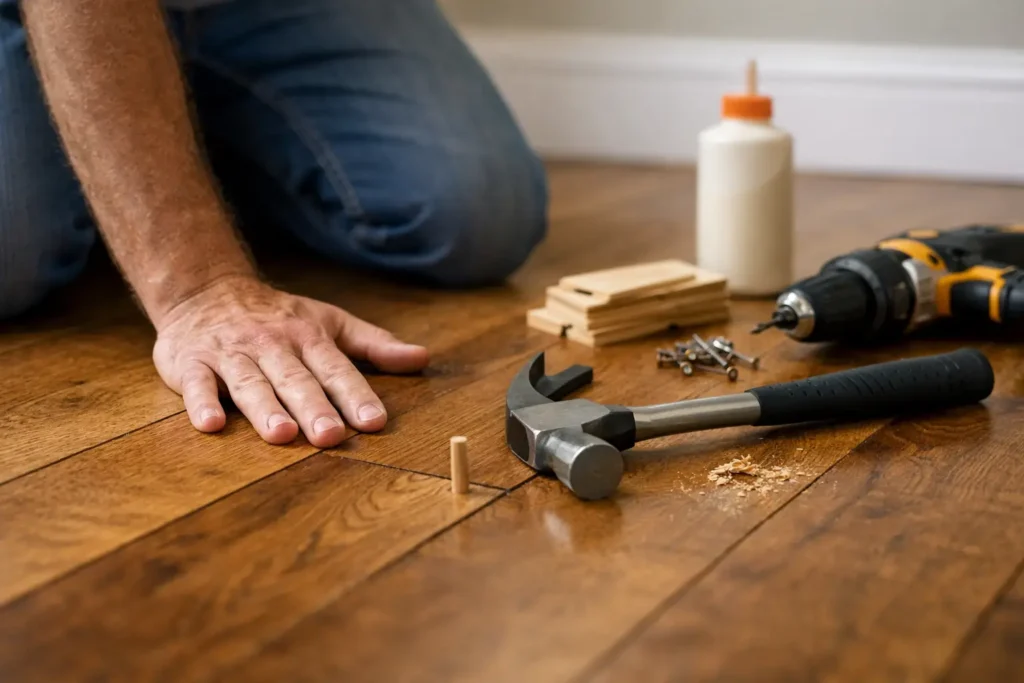
A floor that chirps every time you cross the hallway is more than an annoyance. In many Connecticut homes, squeaks and movement are early signs that the boards, subfloor, or fastening system need attention before the problem spreads. Hardwood floor repairs for loose squeaky boards can often solve the noise, tighten the floor, and protect the look of the room without turning your home upside down.
If the boards feel springy, shift underfoot, or make noise in the same spots every day, the issue usually has a cause you can trace. The right repair depends on where the movement starts, how long it has been happening, and whether the finish or wood itself has already been damaged.
What causes loose and squeaky hardwood boards?
Most squeaks come from movement. When one piece of flooring rubs against another, or when the hardwood moves against the subfloor or fasteners, you hear it. That sound might be mild now, but repeated motion can loosen the area further over time.
Seasonal expansion and contraction is one of the most common reasons. Connecticut homes see humid summers and dry winters, and hardwood reacts to those changes. Boards can shrink slightly, leaving room for movement, then expand again when humidity rises. In older homes, that seasonal cycle may expose weak fasteners or worn subfloor sections that have been hidden for years.
Installation issues can also be part of the problem. A floor that was not fastened properly, has minor subfloor unevenness, or was installed over an area with too much flex may start squeaking long before the wood itself wears out. Water exposure is another factor. Even a small leak near a sink, entryway, or window can affect the board shape and the grip of nails or staples.
The key point is this: a squeak is not one single problem with one single fix. Sometimes the repair is straightforward. Sometimes the sound is only the symptom, and the real issue is underneath.
When hardwood floor repairs for loose squeaky boards make sense
Not every noisy floor needs full replacement. In many cases, targeted hardwood floor repairs for loose squeaky boards are the most practical path, especially when the surrounding floor is still in good shape.
Repairs usually make sense when the squeak is isolated to a few boards, the wood is structurally sound, and the finish damage is limited. If a board has loosened near a doorway, along a high-traffic path, or over one section of subfloor, a professional can often secure or replace only the affected area and blend the repair into the room.
This is also a smart option when homeowners want to preserve an existing floor with character. Many older hardwood floors in Hartford County homes have solid wood worth saving. If the wood species, board width, and overall condition support repair, there is no reason to rush into replacement.
That said, there are times when repair alone is not enough. If squeaks appear across large sections, the floor has visible cupping or warping, or there is widespread movement from subfloor failure, patching one or two boards will not deliver a lasting result. In those cases, a broader repair plan or refinishing strategy may be the better investment.
How professionals diagnose the real problem
Good repair work starts with the right diagnosis. That means looking beyond the sound itself.
A contractor will usually check where the noise occurs, whether the board edges move, and how the floor feels under weight. They may inspect from below if there is basement or crawlspace access. That can reveal gaps between the subfloor and joists, loose fasteners, old water staining, or structural flex that cannot be seen from above.
The condition of the finish matters too. If the loose area has scratches, worn finish, discoloration, or surrounding boards that no longer sit flat, the repair may need to include surface restoration so the final result looks intentional, not patched.
This is where homeowners benefit from working with an experienced hardwood specialist rather than guessing at a surface fix. A squeak may seem minor, but the wrong repair can leave visible nail heads, mismatched boards, or a temporary improvement that fails the next season.
Repair options for loose squeaky boards
The best repair depends on the source of movement. If the board has simply loosened from its fastening, it may be resecured. If the board itself is split, warped, or too worn to hold firmly, replacement is often the better choice.
When the issue is below the surface, the repair may involve securing the subfloor, improving support, or reducing movement where materials meet. In some homes, especially older Connecticut properties, a combination of subfloor tightening and selective board repair is what finally resolves the problem.
Cosmetics matter just as much as structure. A repair should not just stop the squeak. It should preserve the appearance of the floor. That may mean color-matching replacement boards, blending repaired sections, or refinishing the affected area so it looks consistent with the rest of the room.
For homeowners with worn, scratched, or faded floors, combining repairs with refinishing often delivers the strongest result. Once the loose or noisy boards are corrected, the floor can be restored for a cleaner, more uniform appearance.
Why dustless sanding matters after repair
A lot of squeaky board repairs are not fully finished until the surface is blended and refinished. That is where process matters.
At Dustless Hardwood Floors LLC, our proprietary dustless sanding system leaves zero dust in the home. For families with children, pets, or allergy concerns, that makes a real difference. You get the benefit of repaired and renewed hardwood floors without coating your living space in fine sanding residue.
That clean approach matters even more in occupied homes. If the repair is in a hallway, bedroom, family room, or main living area, homeowners want the floor fixed and restored without unnecessary disruption. Dustless sanding supports that outcome while also helping create a more polished final appearance after board replacement or repair work.
For floors that need both structural correction and aesthetic improvement, a dustless refinishing step can turn a nagging problem area into a room that feels fully restored.
Signs you should not wait
A single squeak that stays the same for years may not be urgent. A squeak that gets louder, spreads, or comes with visible movement is different.
If boards feel loose near stairs, entrances, kitchens, or heavily used walkways, it is wise to address them early. These areas take more traffic, and ongoing movement can wear down edges, loosen adjacent boards, and make the repair more involved later. Gaps that widen, boards that lift at the ends, or changes after a leak are also worth prompt attention.
Homeowners preparing to sell or rent a property should be especially mindful here. Buyers and tenants notice floor noise quickly. Even when the issue is repairable, it can create the impression of deferred maintenance if left alone.
Repair or replace? It depends on the floor
This is one of the most common questions, and the honest answer is that it depends. Solid hardwood with localized movement is often a strong repair candidate. Engineered flooring can also sometimes be repaired, but material availability, wear layer thickness, and how the floor was installed all affect the options.
Age is not the deciding factor by itself. Some older floors are excellent candidates for repair and refinishing because the wood is high quality and the wear is limited to select areas. On the other hand, a newer floor with moisture damage or widespread installation problems may need a more extensive fix.
Cost should be weighed against longevity, not just the immediate invoice. A targeted repair is worthwhile when it solves the cause and extends the life of the floor. If it only masks a broader problem, replacement or a larger restoration plan may save money over time.
Choosing the right contractor for hardwood floor repairs for loose squeaky boards
This kind of work calls for more than general carpentry. Hardwood flooring repairs have to be structurally sound, visually consistent, and appropriate for the species, finish, and age of the floor.
Connecticut homeowners should look for a licensed and insured hardwood flooring contractor who can evaluate both the floor surface and what may be happening underneath. It also helps to choose a company that can handle repairs and refinishing together when needed, so the final result feels complete.
For many homeowners in Manchester, West Hartford, Glastonbury, and surrounding areas, clean execution is just as important as craftsmanship. If repair work leads to sanding, the process should support a healthy, comfortable home environment. That is exactly why a true dustless system matters.
Loose, squeaky boards rarely fix themselves, but they also do not always mean the floor is beyond saving. When the cause is identified early and the repair is done properly, your hardwood can feel solid again, look beautiful, and stay that way for years.