
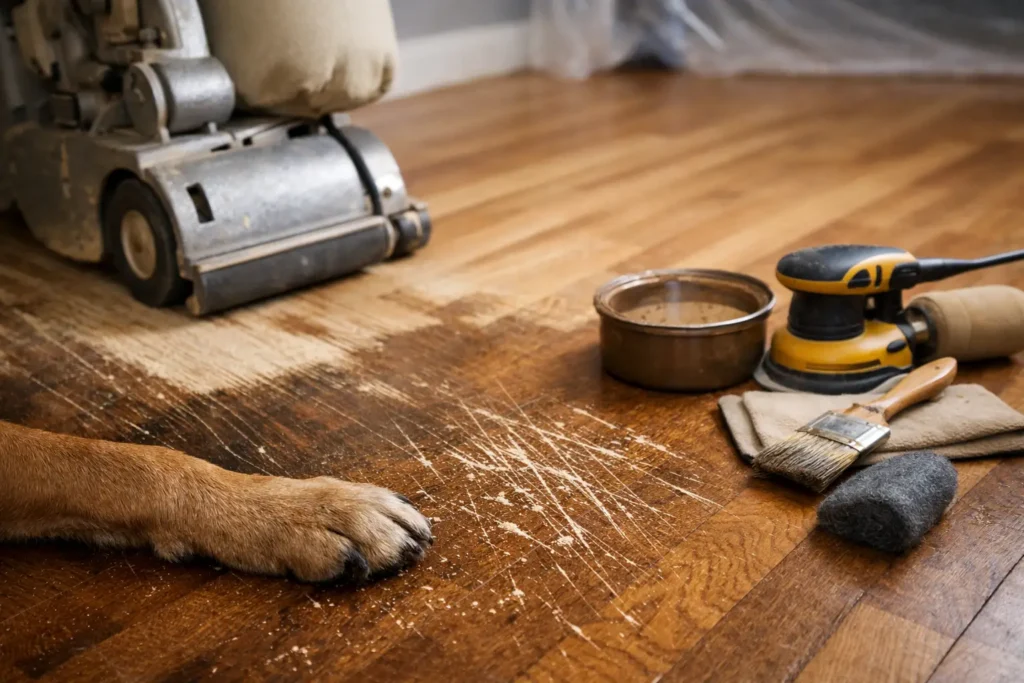
A few dog nail tracks by the back door can make an entire hardwood floor look older than it is. The frustrating part is that pet scratches rarely stay in one small area. They collect in hallways, around food bowls, near windows, and anywhere your cat or dog runs, turns, or jumps. Hardwood floor refinishing for pet scratches is often the fastest way to bring the floor back to a clean, even, like-new appearance without replacing boards that still have plenty of life left.
For Connecticut homeowners, the real question is not whether scratches are normal. They are. The question is whether the damage is only in the finish, whether the wood itself has been marked, and whether a simple touch-up will hold up or if the floor needs a full professional refinish.
When pet scratches need refinishing
Not every scratch means your floors need a full restoration. Light surface marks that only affect the topcoat can sometimes be improved with cleaning, buffing, or a maintenance coat. But when the floor looks dull in traffic lanes, the sheen is uneven, or scratch patterns are visible across multiple rooms, spot fixes usually leave patchy results.
A good rule is to look at color and depth. If the scratch appears white or light and disappears from certain angles, it may be in the finish only. If it looks dark, catches your fingernail, or exposes raw wood, the damage is deeper. At that point, refinishing is usually the better investment because it restores the full surface instead of chasing individual marks.
This matters even more in homes with active pets. Once the protective finish is worn down, new scratches happen faster. Moisture from water bowls, wet paws, or accidents can also seep into exposed areas and create staining or board damage over time.
What hardwood floor refinishing for pet scratches actually fixes
Professional refinishing addresses more than the visible lines left by nails. It removes worn finish, blends isolated damage into the surrounding floor, and builds a new protective layer across the entire surface. That is why refinishing tends to look dramatically better than touch-up kits or stain markers, especially in living rooms, entryways, and open floor plans where mismatched repairs stand out.
It can correct common pet-related wear such as surface scratching, dull finish, uneven sheen, minor discoloration, and general traffic wear. It can also improve floors that look gray, faded, or tired from repeated cleaning and abrasion.
There are limits, and homeowners should know them. Deep gouges may need board repair before refinishing. Black stains from long-term pet urine can require replacing affected boards. Very thin engineered wood may have limited refinishing options depending on the veneer thickness. A trustworthy contractor should say so clearly rather than promising a perfect result in every case.
Why professional refinishing is different from a DIY fix
Pet scratches tempt homeowners into trying the quickest remedy first. That makes sense. Nobody wants a major project if a simple fix will do. The issue is that most DIY products mask the problem rather than restore the floor. They can darken some scratches, add temporary shine, or fill isolated marks, but they do not create an even appearance across the room.
Refinishing is more precise because the floor is treated as one continuous surface. Scratched finish is removed evenly, problem areas are blended properly, and a new coating is applied with consistency in sheen and protection. The result looks intentional, not patched.
For families, there is another major factor: cleanliness. Traditional sanding methods are one reason many homeowners postpone refinishing. Dustless Hardwood Floors LLC uses a proprietary dustless sanding system that leaves zero dust in the home. That matters if you have children, pets, or anyone in the household who is sensitive to airborne particles. It also makes the experience far more comfortable for busy homeowners who want restored floors without turning their house upside down.
The best finish choices for homes with pets
The right finish matters just as much as the sanding itself. If your floors looked great after the last refinish but quickly showed new wear, the problem may not have been the wood. It may have been the finish selection, sheen level, or maintenance routine.
In pet-friendly homes, lower-sheen finishes often perform better visually because they show fewer scratches than high-gloss floors. Satin is a common favorite because it offers a clean, updated look without highlighting every nail mark. Matte can be an excellent option for homeowners who want a more natural appearance and easier day-to-day upkeep.
Water-based finishes are also worth considering for many Connecticut households. They provide strong protection, a cleaner indoor environment, and lower odor than older finishing systems. That can be especially appealing for families, allergy-sensitive homes, and anyone who wants a more comfortable refinishing process.
The best choice still depends on your wood species, current color, household activity level, and design goals. A large dog on red oak creates different wear patterns than a smaller pet on maple or engineered hardwood. That is why product selection should be tied to how you actually live in the home, not just what looks good in a sample.
Should you refinish or replace scratched hardwood?
Homeowners often assume replacement is necessary once pet damage becomes obvious. In reality, refinishing is usually the smarter path when the boards are structurally sound. It costs less than full replacement, preserves the existing floor, and can dramatically improve appearance.
Replacement makes more sense when boards are warped, heavily stained, split, or too thin to sand safely. It can also be the right choice if you want to change the layout of the flooring or if previous repairs left the floor inconsistent.
In many homes, the answer is a combination. A few damaged boards are repaired or replaced, then the entire floor is refinished so everything matches. That approach is often ideal for localized pet damage near doorways, litter box areas, or feeding stations.
What Connecticut homeowners can expect during the process
The refinishing process should feel straightforward, not stressful. A professional evaluation comes first so you know whether the scratches are finish-deep, wood-deep, or tied to broader wear. From there, the floor is prepared, sanded with a dustless system, and refinished with the stain and protective coating that best fits your space.
For homeowners in Manchester, West Hartford, Glastonbury, and surrounding Hartford County communities, a dustless approach is more than a convenience. It is a quality-of-life benefit. You get the restored beauty of professionally refinished hardwood floors without dust spreading through living areas, settling into vents, or creating extra cleanup afterward.
That is one reason so many families prefer working with a licensed and insured hardwood flooring contractor rather than trying to manage pet scratch repairs one room at a time. The result is cleaner, more consistent, and built to last.
How to reduce future pet scratches after refinishing
Even beautifully refinished floors still need protection. Pets and hardwood can absolutely coexist, but a few habits make a noticeable difference.
Keeping nails trimmed is the simplest step. Area rugs or runners in high-speed zones like hallways and entries help absorb wear before it reaches the finish. Felt pads under bowls and pet furniture prevent extra abrasion, and quick cleanup around water stations protects the finish from moisture exposure.
It also helps to use the right cleaning products. Harsh cleaners can dull a finish and shorten its lifespan. A cleaner made for hardwood floors, used with a soft microfiber pad, is usually the safest choice. If your floor starts to lose sheen years from now, a maintenance coat may refresh protection before another full refinish is needed.
Choosing the right contractor for hardwood floor refinishing for pet scratches
This is not a project where homeowners should have to guess. You want clear answers about what can be repaired, what finish will hold up best, and what kind of result is realistic for your specific floor. You also want confidence that the process will be clean, safe, and professionally managed from start to finish.
If you are comparing contractors, ask whether they use a true dustless sanding system, whether they are licensed and insured in Connecticut, and whether they can explain finish options in plain language. Good refinishing work is not just about removing scratches. It is about restoring the floor in a way that fits your home, your family, and the way your pets actually use the space.
When pet scratches start making your hardwood floors look worn before their time, refinishing is often the reset your home needs. The right approach brings back warmth, color, and protection, and it lets you enjoy your floors again instead of noticing every mark the moment sunlight hits the room. If you want that result without the usual hassle, you can learn more or request a quote at https://Dustlesshardwoodfloorsllc.com.