
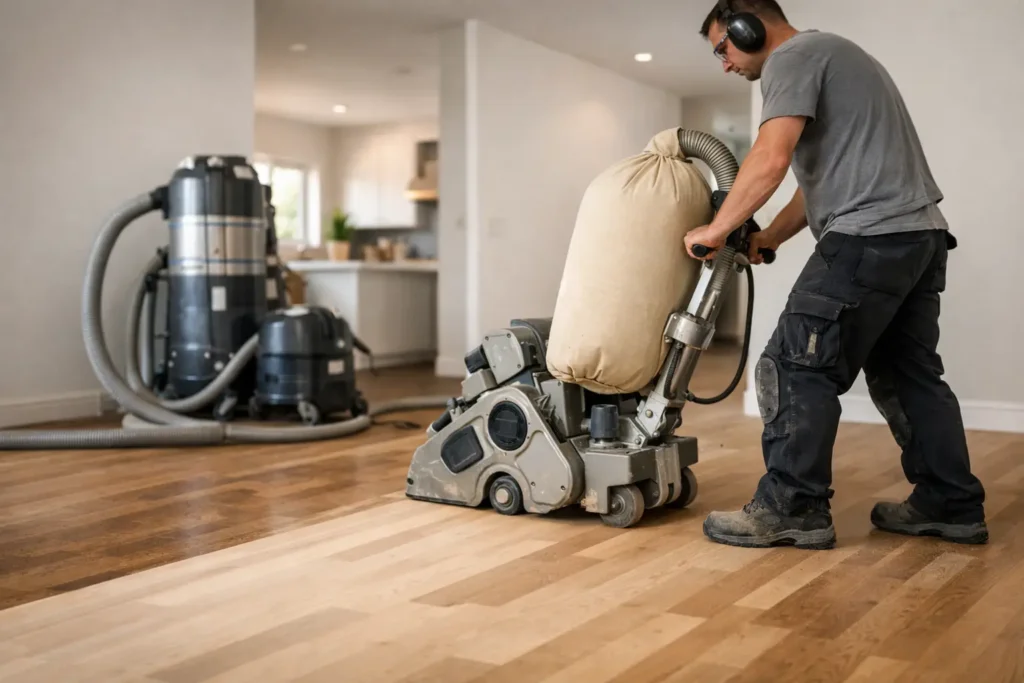
If your hardwood floors look tired but you have been putting off refinishing because you do not want a film of debris settling through your home, the dustless hardwood floor sanding process changes that decision completely. Instead of turning a flooring project into a cleanup project, it restores the wood while keeping your home clean, comfortable, and safe for children, pets, and allergy-sensitive family members.
For many Connecticut homeowners, that difference matters as much as the finish itself. Floors need to look better, of course, but the experience of getting there matters too. When the process is truly dustless, you get the beauty of professionally restored hardwood without the usual stress people associate with sanding.
What the dustless hardwood floor sanding process actually means
A true dustless system is designed to capture debris at the source while the floor is being sanded. That means particles do not get released throughout the living space. The result is zero dust in the home, which is exactly why so many families now choose this method over older sanding approaches.
That benefit is not just about convenience. It is about protecting indoor air quality and making a major home improvement project feel manageable. If you have kids playing on the floor, pets moving room to room, or anyone in the home who is sensitive to airborne particles, a dustless process is the clear choice.
There is also a quality advantage. When the work area stays clean, the finish can be applied under better conditions. That supports a smoother, more consistent final result and helps showcase the natural character of the hardwood.
How the dustless hardwood floor sanding process works
Every floor has its own condition, species, and finish history, so the exact sequence can vary. Still, the overall dustless hardwood floor sanding process follows a clear progression designed to produce clean, predictable results.
1. Floor evaluation and prep
The process starts with a close inspection of the wood. Surface scratches, deep wear patterns, fading, pet stains, minor cupping, water marks, and damaged boards all affect the sanding plan. This first step helps determine whether the floor needs a full refinish, spot repair, board replacement, staining, or simply a fresh protective coat.
Preparation is straightforward and purposeful. Furniture is removed from the work area, transitions are checked, and any loose boards, protruding nails, or repair concerns are addressed before sanding begins. Good prep protects the floor and sets up a more even final finish.
2. Professional sanding with dustless containment
Next comes the core sanding phase. Specialized equipment removes the old finish and smooths out wear while the dustless system captures particles immediately. This is the point where homeowners usually notice the biggest difference between a traditional expectation and a modern dustless experience. The home stays clean, and the job feels controlled from start to finish.
The sanding itself usually happens in stages, moving from more aggressive grits to finer ones. That progression removes damage, levels the surface, and refines the wood so it is ready for stain or seal. Edges, corners, and detailed areas are blended carefully so the room looks uniform rather than patched together.
3. Repairs and detail work
If your floors have isolated damage, this is often the stage where those issues are corrected. Small gaps may be addressed, damaged planks can be replaced, and transitions can be refined. Not every floor needs extensive repair work, but when it is necessary, doing it during the sanding process creates a more polished result.
This is also where experience matters. A floor with light cosmetic wear is very different from one with black water marks, old pet damage, or mismatched repair boards from a previous project. A professional assessment helps you understand what can be improved dramatically and where expectations should stay realistic.
4. Staining, if desired
Some homeowners want to keep the natural tone of the wood. Others want to update the look completely with a new stain color. Both options can work beautifully, and the right choice depends on the style of the home, the species of wood, and how much maintenance you want over time.
Darker stains can create a dramatic look, but they may show scratches and dust from everyday living more easily. Lighter and medium tones often feel more forgiving in active households. In many Connecticut homes, especially busy family spaces, that practical balance matters just as much as color preference.
5. Sealing and finishing
Once the sanding and any staining are complete, the floor is sealed and protected with finish coats. This is what gives the floor its depth, durability, and final sheen. Depending on your goals, that may mean a matte, satin, semi-gloss, or glossier appearance.
For most homeowners, satin is the sweet spot. It looks elegant, hides everyday wear better than shinier finishes, and works well in both classic and updated interiors. The best finish is not always the one with the most shine. It is the one that matches how you live in the space.
Why homeowners prefer this process
The biggest reason is simple – zero dust in the home. That one benefit changes the whole project experience. You are not worrying about residue drifting into other rooms, settling into vents, or lingering on furniture and surfaces.
That cleaner environment is especially valuable for families with young children, pets, and anyone with allergies or sensitivities. It also makes a real difference for homeowners who are trying to keep life moving during a flooring project instead of treating it like a major disruption.
There is a second benefit people often do not think about right away: confidence. When a contractor uses a professional dustless system, it signals care, preparation, and respect for the home. That matters when you are inviting a crew into your living space and trusting them with a major visual feature of the house.
What kinds of floors are good candidates
Most solid hardwood floors with visible wear are good candidates for refinishing through a dustless process. If the floor has scratches, dull traffic paths, fading from sunlight, minor stains, or a finish that has broken down over time, refinishing can often bring it back to life.
Engineered hardwood depends on the thickness of the wear layer. Some engineered floors can be sanded and refinished successfully, while others are too thin for a full restoration. This is one of those areas where it depends on the product, the age of the floor, and how many times it has been refinished before.
If boards are severely warped, structurally compromised, or damaged beyond repair, replacement may be the better route for some sections. A trustworthy contractor should explain that clearly rather than forcing every floor into the same solution.
What Connecticut homeowners should ask before booking
You do not need a long checklist, but you should ask smart questions. Is the contractor licensed and insured in Connecticut? Do they specialize in hardwood floors, or is flooring just one of many side services? Can they explain the finish options clearly and help you choose based on your household, not just appearance?
You should also ask about repairs, stain testing, expected timeline, and what is included in the quote. Clear answers reduce surprises later. Homeowners in places like Manchester, West Hartford, Glastonbury, and surrounding Hartford County towns usually want the same thing – a beautiful floor, a clean process, and no hidden fees.
Why the process matters as much as the result
A hardwood floor refinish is not only about changing how the floor looks. It is about improving how the home feels. Clean, renewed wood floors brighten rooms, elevate the value of the property, and make everyday living more enjoyable.
But that transformation feels even better when the process itself respects your home. A true dustless sanding system delivers that difference. It gives homeowners the confidence to move forward with refinishing without worrying about cleanup, air quality, or an avoidable headache.
At Dustless Hardwood Floors LLC, that is the standard – zero dust in the home, professional craftsmanship, and clean, beautiful results for Connecticut homeowners who want their floors restored without the mess or stress. If your hardwood has lost its color, smoothness, or character, the right time to refinish it is usually before the wear gets deeper and more expensive to correct.
Beautiful floors should not come with a complicated recovery plan, and with the right dustless process, they do not have to.