
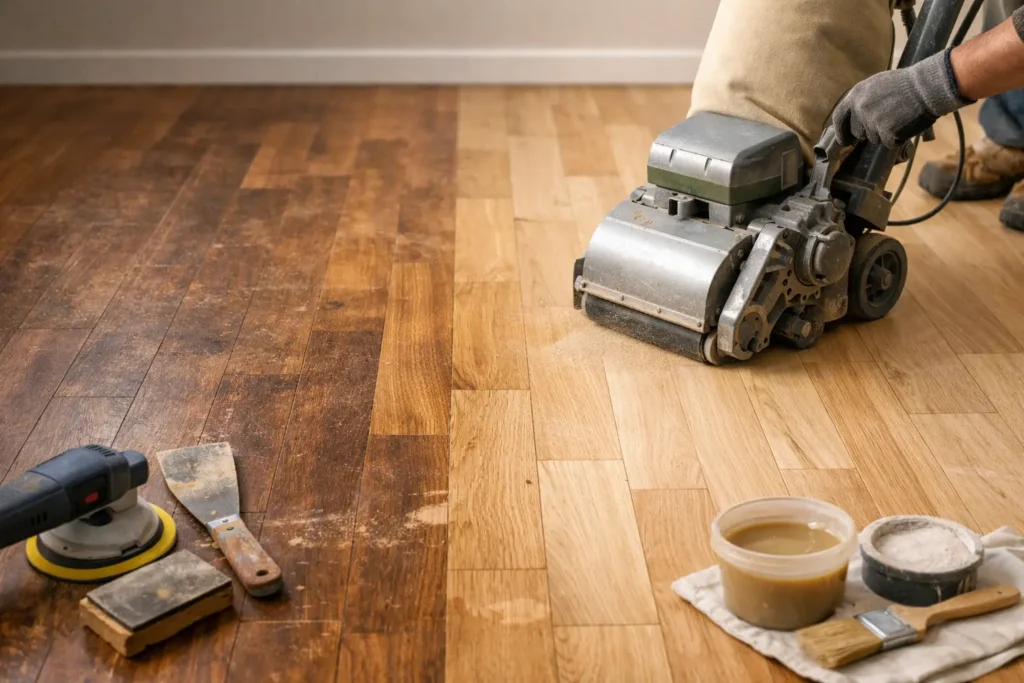
A lot of Connecticut homeowners ask the same question after years of traffic, pet nails, faded finish, or light water marks: can you refinish engineered hardwood floors, or do they need to be replaced? The honest answer is yes, many engineered wood floors can be refinished – but not all of them, and not all in the same way.
That difference matters. Refinish the right floor, and you can restore the color, smooth out wear, and bring back the clean, updated look of real hardwood without tearing everything out. Refinish the wrong floor, or sand too aggressively, and you can do permanent damage to the top layer. This is one of those projects where a quick online answer is not enough.
Can you refinish engineered hardwood floors more than once?
Sometimes, but it depends on the floor’s wear layer. Engineered hardwood is made with a real hardwood veneer on top of a plywood or layered core. That top veneer is what determines whether sanding and refinishing is possible.
If the wear layer is thick enough, refinishing can be an excellent option. If it is too thin, a full sanding may not be safe. Some engineered floors can handle one full refinishing. Higher-quality products may allow more than one. Others are only good candidates for a light screen and recoat, which refreshes the finish without sanding deeply into the wood.
This is why one engineered floor in West Hartford or Glastonbury may be restorable, while another in a similar-looking home may not be. The surface can look nearly identical, but the construction underneath is what decides the outcome.
The key question is the top veneer thickness
The wear layer is the real wood layer on top of the engineered plank. A thicker veneer gives a professional more room to work. A thinner veneer leaves very little margin for error.
As a general rule, engineered floors with a veneer around 3 millimeters or thicker are often good candidates for refinishing. Floors with a thinner veneer may still be improved, but the approach has to be more conservative. In some cases, a fresh topcoat is the smarter move than full sanding.
There are also practical clues. If the floor has deep gouges, heavy cupping, or exposed core material at damaged spots, refinishing may not solve everything. If the wear is mostly in the finish – dullness, light scratches, faded sheen – the odds are much better.
A professional inspection is the safest way to know. That evaluation should look at plank thickness, previous refinishing history, edge wear, board condition, and whether the floor was factory-finished with a surface treatment that affects adhesion.
When refinishing engineered floors makes sense
Refinishing is often the right choice when the floor is structurally sound but cosmetically worn. That includes surface scratches, traffic patterns in hallways, sun fading near windows, minor pet wear, and finish breakdown in kitchens or entry areas.
It also makes sense when homeowners want a color change. Many people assume engineered wood locks them into the original stain forever. Not necessarily. If the veneer is thick enough, a qualified refinishing contractor can sand and restain the floor for a noticeably different look.
For Connecticut homeowners preparing a house for sale, refinishing can also be a smart value decision. Restored floors make rooms feel cleaner, brighter, and better maintained. In family homes, it can extend the life of the floor without the cost and disruption of replacement.
When replacement may be the better option
Not every engineered floor should be refinished. If the veneer is too thin, boards are delaminating, water damage is severe, or the floor has already been sanded to its limit, replacement may be the safer long-term investment.
There are also situations where isolated repairs plus a recoating service make more sense than a complete refinish. For example, if only a few boards near a sink or exterior door are damaged, targeted repair can restore the look without overworking the rest of the floor.
The goal is not to push refinishing at all costs. It is to choose the option that protects the floor, improves appearance, and gives you lasting value.
Can you refinish engineered hardwood floors without the mess?
For many homeowners, the hesitation is not just about whether the floor can be refinished. It is about what the process will feel like inside the home. Families with kids, pets, or allergies want better floors, but they do not want their house turned upside down to get them.
That is exactly why dustless sanding matters.
With a professional dustless system, engineered hardwood floors can be refinished with zero dust left in the home. That means clean results, no coating of fine debris on furniture or vents, and a much more comfortable experience for families, children, pets, and allergy-sensitive households. The floor gets restored without the traditional cleanup concerns homeowners often worry about.
For occupied homes in places like Manchester, South Windsor, and greater Hartford County, that cleaner process is not a luxury. It is the standard many homeowners now expect.
What refinishing engineered wood floors usually involves
Once a floor is confirmed as a good candidate, the refinishing process depends on its condition and your goals. If the finish is worn but the color is staying the same, the work may focus on removing the damaged top layer and applying a fresh protective coating. If you want a stain change, more complete sanding may be needed.
The condition of the boards also affects the plan. Minor gaps, isolated damage, or transition issues may need repair before the new finish goes down. A quality result is not just about making the floor shiny again. It is about correcting the problems that make the floor look tired in the first place.
Finish selection matters too. Sheen level, durability, dry time, and household needs all play a role. Homes with pets may prioritize scratch resistance. Busy households may want a finish that keeps maintenance simple. Property owners preparing rentals may want a durable, neutral look that appeals to future tenants.
Why engineered floors require an experienced approach
Solid hardwood gives a contractor more sanding depth to work with. Engineered wood does not. That smaller margin means technique matters more.
A professional has to read the floor correctly, adjust the sanding approach to the veneer thickness, and avoid removing more material than necessary. They also need to know when not to sand aggressively. That judgment is what protects the floor and delivers a smooth, even finish.
This is especially important with hand-scraped, wire-brushed, or factory-finished engineered products. Some textures can be changed by sanding. Some finishes need special preparation for proper recoating. A one-size-fits-all approach is risky.
What Connecticut homeowners should do next
If you are looking at dull, scratched, or dated engineered wood floors and wondering whether they can be saved, start with an inspection instead of an assumption. Many floors that look ready for replacement are actually good candidates for restoration. Others need a lighter-touch solution. The right answer comes from the floor itself.
For homeowners who want beautiful results without residue throughout the house, a dustless refinishing service is the clear advantage. At Dustless Hardwood Floors LLC, our proprietary dustless sanding system leaves zero dust in the home, giving Connecticut families the clean, polished finish they want without the usual concerns about indoor air, cleanup, or disruption. It is a safer, more comfortable option for children, pets, and allergy-sensitive homes, and it is one of the reasons so many local property owners choose professional refinishing over replacement.
If your engineered hardwood still has life left in it, refinishing can be one of the smartest upgrades you make – especially when the process leaves your home as clean as your floors look.